staff Reporter
Three streams of Lasya merged into a confluence of beauty, devotion and emotion
Myth in gestures, folk spirit in rhythm, and India in expression “Lasya Triveni” showcased the harmonious confluence of three classical dance traditions
The Swarna Jayanti Auditorium immersed in a Triveni of rhythm, emotion and devotion
Three streams of Indian classical dance flowed together in “Lasya Triveni”
Enchanting performances of Bharatanatyam, Mohiniyattam and Kuchipudi captivated the audience
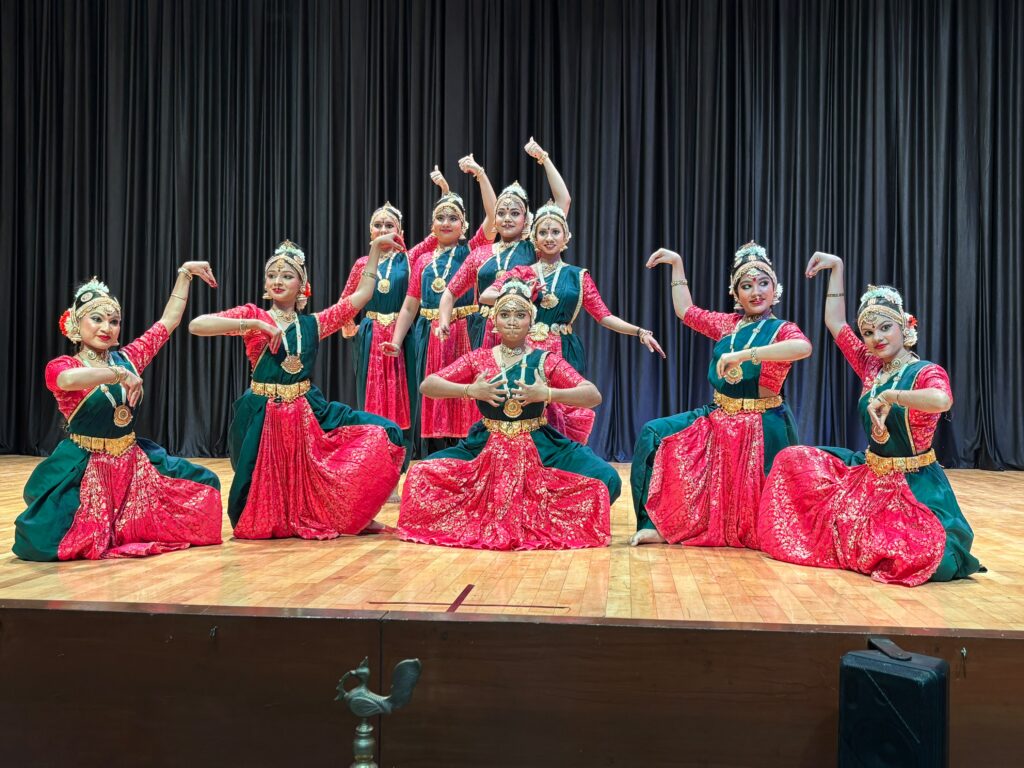
Bhopal: The cultural evening “Lasya Triveni,” organized as part of the 125th Foundation Training Programme at the Swarna Jayanti Auditorium of RCVP Noronha Academy of Administration and Management, Bhopal, emerged as a memorable celebration of Indian classical dance. Artists of the Shreelayam Natyashree Academy of Classical Arts introduced trainee officers, faculty members and art lovers to the richness of India’s dance heritage through captivating presentations of Bharatanatyam, Mohiniyattam and Kuchipudi.
The programme commenced with a graceful Ganesha Stuti in the Mohiniyattam style. Set in Raga Chakravakam and Adi Tala, the invocation filled the auditorium with an atmosphere of devotion and serenity. This was followed by Tarangam, one of the most celebrated compositions in the Kuchipudi repertoire, in which the artists vividly portrayed the divine lilas of Lord Krishna through expressive movement and rhythmic brilliance. The subsequent Rama Stuti, presented in Mohiniyattam, beautifully depicted significant episodes from the life of Lord Rama through evocative dance and abhinaya.
The next presentation, Hanuman Chalisa, was performed in the Bharatanatyam style with remarkable intensity and artistic depth. Through powerful choreography and expressive storytelling, the dancers brought to life the virtues of Hanuman—strength, service, devotion and humility. The audience responded with enthusiastic applause and deep appreciation.
The evening concluded with a grand presentation of Tillana, featuring a seamless confluence of Bharatanatyam, Mohiniyattam and Kuchipudi. This artistic union perfectly embodied the spirit of the title “Lasya Triveni.” While Lasya symbolizes the graceful, gentle and emotive aspect of Indian dance, Triveni signifies the sacred confluence of three streams. The programme thus celebrated the coming together of three great classical dance traditions on a single stage, creating an experience of unity in diversity.
Introducing the academy, the organizers highlighted that Shreelayam Natyashree Academy of Classical Arts was founded in 1999 by Guru Shaji M. and Guru Kalamandalam Kavitha Shaji. For the past twenty-seven years, the institution has been dedicated to preserving and promoting Indian classical dance traditions. More than a thousand students trained by the academy have represented Indian culture on prestigious national and international platforms.
The choreographies presented under the guidance of renowned dancer and guru Kalamandalam Kavitha Shaji reflected the elegance, spiritual depth and artistic excellence of Indian classical dance. Her disciples demonstrated a high degree of technical proficiency, discipline and expressive artistry, earning warm appreciation from the audience.
Dr. Anupama Rawat, Cultural Coordinator of the Academy, remarked that administrative training is not confined to developing technical and governance-related skills alone. Exposure to Indian arts, culture and human values, she said, plays an equally important role in shaping sensitive and effective public servants. She added that throughout the 125th Foundation Training Programme, a variety of activities related to music, dance, classical cinema, Indian knowledge traditions and cultural heritage are being organized regularly to provide trainee officers with a deeper understanding of India’s diverse cultural landscape.
At the conclusion of the programme, the artists were felicitated for their outstanding performances. The audience rose to their feet in appreciation, applauding the performers and describing the evening as one of the most memorable cultural events of the training programme.